Buying Labels from China: Factory-Direct vs Trading Company
Short answer: Factory-direct means one layer — you talk to the people who weave, print and cut the labels, pay the factory price, and get direct QC. A trading company bundles small orders and handles logistics for a margin, which is convenient but adds cost and a communication layer. Most buyers with repeat orders for the same label end up going direct.
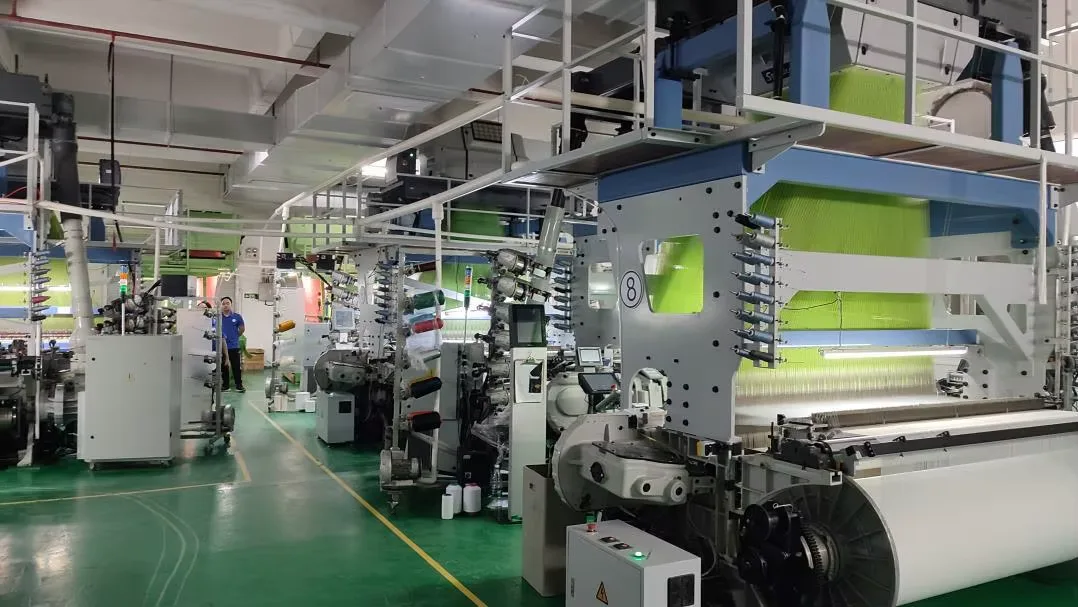
Factory-direct vs trading company
| Dimension | Factory direct | Trading company |
|---|---|---|
| Price | Factory price, one margin | Factory price + trading margin |
| MOQ | Real production minimum (often 50 pcs for labels) | Can bundle several brands to hit lower per-item minimums |
| Customization depth | Talk directly with the people who set up the loom, the printer or the cutter | Requirements pass through a middle layer; detail can blur |
| Communication | One counterpart, direct answers on materials, density, folds | Convenient, but the trading company is not the maker |
| QC access | Video calls, live production photos, per-batch checks on your behalf | Depends on the company — most can arrange inspection but do not control the floor |
| Risk | You verify one factory once, then reuse it | Supplier under the supplier; verify who actually makes the goods |
Neither is wrong. For a first trial order of several small items, a trading company is a low-friction starting point. For repeat runs, brand programs and anything where QC matters, the factory-direct route usually wins on price, speed of iteration and trust.
How a real factory works with importers
The direct route follows a short loop: send artwork and specs → get a line-by-line quote → approve a proof drawing → receive a physical sample → approve bulk production → per-batch QC → ship. Each step is verifiable from abroad: a video call of the sample being made, live photos of the batch, and a QC report before dispatch. The exact steps and typical timelines are laid out in how to order. What matters is that every checkpoint exists — if a supplier skips the proof or the sample stage, that is the first red flag.
How to vet a supplier from abroad
- Registered identity — the business license name and the address should match the factory you think you are dealing with.
- Live proof — a video call through the workshop, or timestamped photos of the machines running your construction. SAIM, for example, shows the Dongguan factory floor openly and will walk you through it on a call.
- Production depth — ask which steps are in-house. Weaving, printing, embroidery, cutting and finishing under one roof means fewer handoffs and fewer excuses.
- Reference shipments — request a recent export record or customer references; a real factory names real ports and routes.
- Sample before bulk — any supplier that pushes straight to production without a proof and sample is skipping the cheapest insurance in the industry.
Why Dongguan
Dongguan is the densest cluster of garment accessory manufacturing in the world. Raw yarn, machinery parts, screen-printing shops, embroidery houses and laser cutting are all within a short drive, which is why label factories here quote fast and iterate fast. If you are sourcing trims from China, Dongguan suppliers are typically closer to the materials and the machine talent than suppliers in other regions. See about SAIM Label for how SAIM sits in that cluster.
Costs beyond the unit price
A complete landed cost is more than the label price: sampling and any tooling (molds or embossing dies where needed), freight (express, air or sea), customs and duties in your country, and payment fees on T/T transfers. Ask for an Ex-works price and a freight quote separately, then compare suppliers on the same basis — it makes the difference between factory-direct and trading company honest.
Vetting suppliers? Start with a real factory: send artwork and specs — a line-by-line quote and sample plan come back within one business day.
Get a QuoteFAQ
Is factory-direct always cheaper than a trading company?
Usually, but not always. A trading company adds a margin on top of the factory price, which shows up in the unit price. It earns that margin by bundling small orders, handling logistics and smoothing communication — fair value for small quantities, but for repeat runs of the same label, direct is almost always cheaper.
What MOQ do Chinese factories actually require?
It varies by construction. Many label factories, including SAIM, start main products from 50 pieces. Complex finishing or custom tooling (PVC molds, embossing dies) raises the practical minimum.
How do I verify a supplier is a real factory?
Ask for the registered company name and full address, then check it on a video call or via live photos of the workshop floor, machines and QC bench. A genuine factory can show production running; a trading company usually cannot show the machines.
Do I need a freight forwarder for label shipments?
For small sample parcels, express couriers (DHL, FedEx, UPS) are simplest. For production orders, a forwarder handles air or sea freight, customs and delivery terms — most factories, including SAIM, ship both ways depending on what you prefer.
How long does shipping from China take?
Express parcels typically arrive in 5-10 working days to most countries. Sea freight takes 3-6 weeks depending on the route and port; air freight sits between the two.
Related reading: Inside the factory · About us · How to order · Label pricing guide · Custom labels buying guide · MOQ and sampling guide · Comparing patch constructions
Turn the guide into a quote
Send artwork, quantity and application — we answer with real options, not a form letter.