Custom Label Pricing: What Determines the Price of Your Quote
Short answer: The price of a custom label is decided by material and weave construction, finished size, quantity, thread colors, fold or finishing, and artwork complexity. Because every order is made to the design, factories quote after reviewing your artwork — not from a fixed price list.
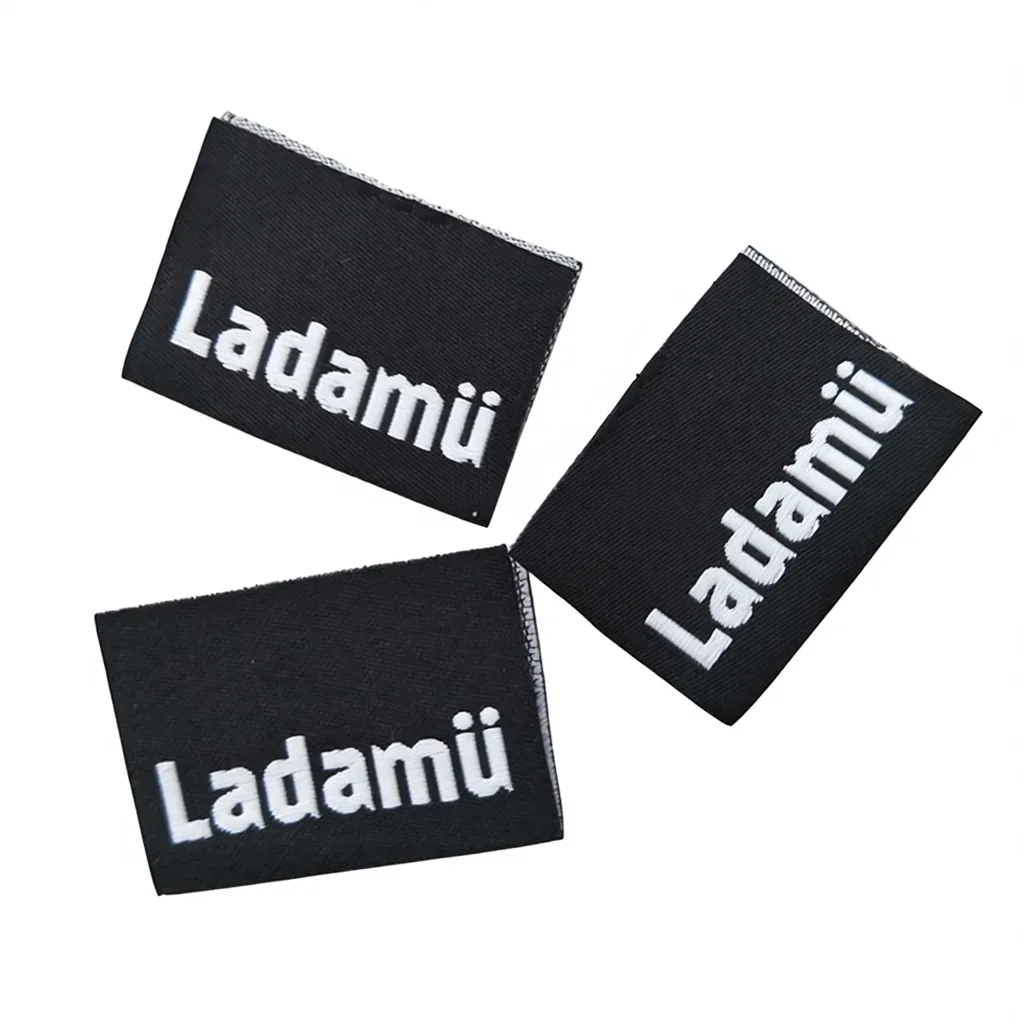
Why there is no price list for custom labels
Woven labels, patches and care labels are made to order. The same nominal product — say, a neck label — can be woven in damask or satin, in 2 or 12 thread colors, folded three ways, laser-cut or die-cut, on cotton or recycled yarn. Each combination has a different machine setup, thread consumption and finishing time. A price list that claims one number for "woven labels" would be wrong for almost every real order. That is why honest factories quote per job: the design and material decide the cost, and the quote tells you exactly what your version costs.
What actually drives the price
| Factor | How it affects price | What buyers should know |
|---|---|---|
| Material & construction | Damask and recycled-yarn weaves run differently from satin or printed satin; each has its own cost base. | Say the garment type and your budget — the factory can suggest the cheapest construction that still meets the look. |
| Finished size | Bigger labels use more yarn and slower weaving time per piece. | A 50 × 20 mm neck label and a 70 × 25 mm designer label are different products. Size first, design second. |
| Quantity | Setup and sampling are fixed costs; bigger runs spread them thinner. | Per-piece price falls as quantity rises — typically fastest between 1,000 and 10,000 pieces. |
| Thread colors | Every added color is an extra setup pass in weaving; high-density detail slows the loom. | 2–5 colors covers most brand marks. Gradients are possible but cost more and are better checked against the density chart. |
| Fold & finishing | End fold, Manhattan fold, center fold, laser cutting, miter corners, die-cut shapes — each is a separate finishing step. | Pick the fold that matches the sewing route (see the woven label size guide and fold guide). |
| Backing (patches) | Iron-on coating, hook-and-loop, sew-on edge finishing all add a process. | Backing is decided by the garment material and how the patch is applied. |
| Artwork quality | Clean vector artwork goes straight to production; redraws and revisions cost time. | AI, PDF, SVG, CDR or EPS at true size saves a round of corrections — see the artwork guide. |
| Packaging & shipping | Poly-bag vs box, loose vs labeled, air vs sea freight. | Ask for an Ex-works price and compare freight separately — it keeps the label price comparable between suppliers. |
Why the quote needs your artwork
Three things are only visible in the design. First, the weave density: a logo with 1.5 pt details needs high-density weaving and a different machine setup than a bold wordmark. Second, the color map: each thread color is a separate setup pass. Third, the fold allowance: the factory computes the cut size from the finished size plus the fold, and that changes yarn consumption. Without artwork, the factory would be quoting blind. That is why the standard flow is artwork first, ballpark range for planning, then a binding quote after review — followed by a proof drawing and physical sample before production. The full route is in how to order.
Have artwork ready? Send it with the size, quantity and application — a line-by-line quote comes back within one business day.
Get a QuoteHow to get an accurate quote fast
- Vector artwork — AI, PDF, SVG, CDR or EPS at true size beats a screenshot every time.
- Finished size — name the visible size in mm (or use the woven label size chart to pick a starting point).
- Quantity — a range is fine; per-piece pricing tiers make it easy to compare.
- Application — garment type and position (collar, side seam, hat band) decide material and fold.
- Deadline — production slots differ, so a target date avoids surprises.
Quotes are returned within one business day, and the proof drawing confirms size, colors and fold before anything is produced. Every quote line item shows what the price is made of — so when something changes, you can see exactly what moved.
FAQ
Can I get a price without sending artwork?
Not an accurate one. Material, weave density, size and finishing are all decided by the design, so a real quote needs your artwork first. We can give a ballpark range for a product type, but the binding price comes after artwork review.
What is the minimum order quantity?
For main products such as woven labels, woven patches and keychains, MOQ starts from 50 pieces. Your exact MOQ depends on the construction and finishing chosen.
Does a larger quantity lower the price per piece?
Yes. Setup and sampling costs are fixed, so they spread thinner over bigger runs, and thread waste per piece falls. Most buyers see the best per-piece price between 1,000 and 10,000 pieces.
How long does a quote take?
With artwork in hand, quotes are normally returned within one business day. The physical sample and proof drawing follow, and production starts after you confirm.
Why is my second quote higher than the first?
The usual causes are a change in material or weave construction, more thread colors, a bigger size, or an extra finishing step such as a merrow border or die-cut shape. Every change has a cost — the quote lists each line so you can see what moved.
Related reading: Custom woven labels · Size guide · Artwork guide · How to order · Woven label fold types · MOQ and sampling guide
Turn the guide into a quote
Send artwork, quantity and application — we answer with real options, not a form letter.